
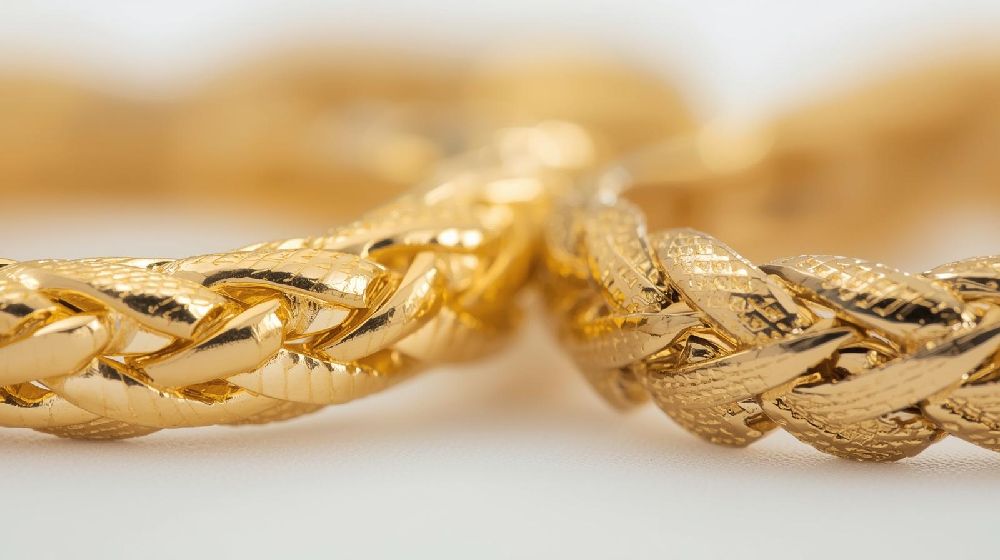
In today’s global jewelry market, retailers and private label brands often face an important sourcing decision: Gold-Filled or Solid Gold?
While both options offer beauty and value, their manufacturing processes, durability standards, and pricing structures differ significantly. Understanding these differences helps global retailers make informed business decisions.
At DVN Jewelry, decades of manufacturing experience in gold-filled and gold products allows brands to choose solutions that align with their target market and growth strategy.
What Is Solid Gold Jewelry?
Solid gold jewelry is made entirely from a gold alloy. The purity may vary (such as 14K, 18K, or 22K), but the metal composition runs consistently throughout the entire piece.
Manufacturing Characteristics:
-
Melted and cast or formed from solid gold alloy
-
Higher intrinsic metal value
-
Strong resale and investment appeal
-
Suitable for heirloom and luxury collections
Solid gold requires precise alloy control to ensure durability while maintaining color consistency.
What Is Gold-Filled Jewelry?
Gold-filled jewelry contains a thick outer layer of real gold mechanically bonded to a base metal core (usually brass). Unlike gold plating, the gold layer in gold-filled products is significantly thicker and designed for long-term wear.
Manufacturing Characteristics:
-
Mechanical bonding under heat and pressure
-
Controlled gold thickness standards
-
Strong resistance to tarnish
-
Lightweight and cost-efficient
At DVN Jewelry, secure bonding techniques ensure that the gold layer remains durable, smooth, and resistant to peeling under normal wear conditions.
Key Manufacturing Differences
1️⃣ Material Structure
-
Solid Gold: Entire structure is gold alloy
-
Gold-Filled: Outer layer gold + engineered core metal
2️⃣ Cost Efficiency
Solid gold involves higher raw material investment, making it premium-priced.
Gold-filled offers a luxury look at a more accessible cost — ideal for scalable retail markets.
3️⃣ Weight & Engineering
Gold-filled jewelry allows manufacturers to create durable yet lightweight pieces without compromising appearance.
For global retailers targeting daily-wear markets, this balance is critical.
4️⃣ Durability & Wear
Both can be durable when manufactured properly.
However, durability depends heavily on:
-
Thickness control
-
Polishing techniques
-
Bonding precision
-
Quality inspection standards
DVN Jewelry emphasizes structural integrity in both categories to ensure consistent long-term performance.
Which Option Is Right for Global Retailers?
Choose Solid Gold If:
-
Your brand targets luxury positioning
-
Investment value matters to customers
-
You focus on premium or bridal collections
Choose Gold-Filled If:
-
You want competitive retail pricing
-
You require bulk production scalability
-
You target fashion-forward, daily-wear markets
-
You want strong margins with lower metal investment
Many successful global brands use gold-filled jewelry to scale their core collections while offering solid gold as premium lines.
The DVN Jewelry Advantage
DVN Jewelry focuses on:
-
Precision metal thickness control
-
Secure bonding technology
-
Micro-polishing for mirror finish
-
Strict quality inspection systems
-
Sustainable and responsible manufacturing
Whether producing gold-filled collections for wholesale or solid gold pieces for select markets, consistency and durability remain central to the process.
Final Thoughts
The difference between gold-filled and solid gold is not just about material — it is about strategy.
Retailers who understand manufacturing differences can better position their pricing, protect margins, and meet customer expectations.
With decades of expertise, DVN Jewelry supports global brands with transparent manufacturing processes and reliable production standards that help businesses grow confidently.