
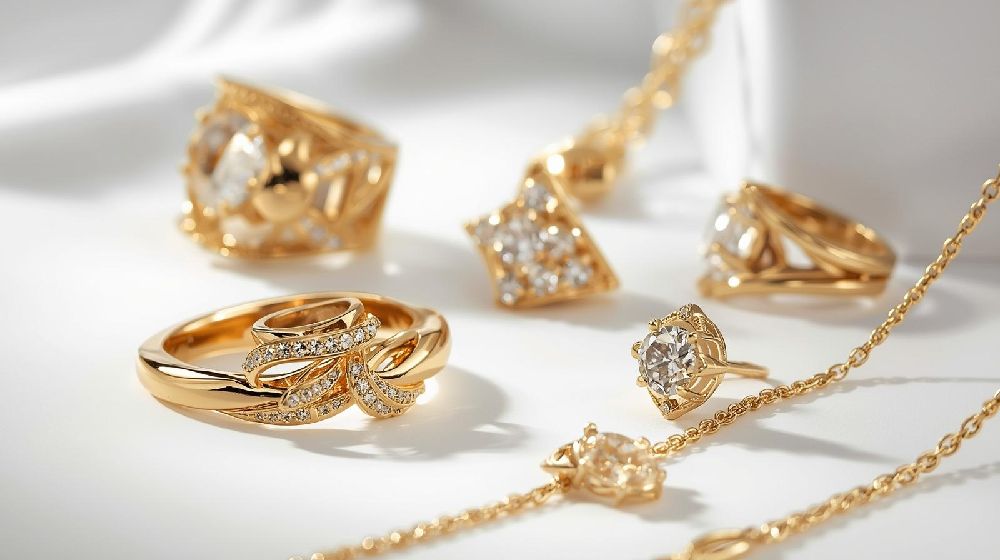
 In the evolving world of fine jewelry, finish matters just as much as design. One of the most important surface enhancement techniques used in modern jewelry manufacturing is rhodium plating. It enhances shine, improves durability, and gives gold jewelry a refined, premium appearance.
But when is rhodium plating used? And why has it become so essential in contemporary gold jewelry production?
Let’s explore.
What is Rhodium?
Rhodium is a rare, precious metal from the platinum family. It is highly reflective, extremely durable, and resistant to tarnish and corrosion. Due to its bright white shine and hardness, it is commonly used as a plating layer over gold jewelry.
Rhodium itself is more expensive than gold, but since only a thin layer is applied, it remains cost-effective in jewelry manufacturing.
Why Rhodium Plating is Used in Gold Jewelry
1️⃣ To Enhance Shine and Brightness
Rhodium provides a brilliant, mirror-like white finish. It enhances the overall appearance of jewelry, making it look more luxurious and polished.
2️⃣ To Create White Gold Finish
Most white gold jewelry is not naturally bright white. It has a slight yellow tone due to its gold base. Rhodium plating gives it the crisp white appearance customers expect.
3️⃣ To Increase Surface Durability
Rhodium is harder than gold. Plating creates a protective layer that:
-
Reduces scratches
-
Minimizes surface wear
-
Increases longevity
4️⃣ To Prevent Tarnishing
Although gold does not tarnish easily, alloys mixed with gold may react over time. Rhodium protects the surface and maintains long-lasting brilliance.
5️⃣ For Two-Tone & Designer Effects
Rhodium plating is also used selectively to create:
-
Dual-tone bangles
-
Highlighted patterns
-
Matte & glossy contrast effects
-
Black rhodium designer finishes
When is Rhodium Plating Recommended?
Rhodium plating is commonly used in:
-
White gold rings
-
Bridal jewelry sets
-
Diamond-studded pieces
-
Modern bangles and bracelets
-
Export-quality jewelry
It is especially important in high-precision, luxury designs where visual perfection is essential.
The Rhodium Plating Process
The process involves several precise steps:
-
Thorough Cleaning – Removing oil and impurities
-
Surface Preparation – Polishing for smooth finish
-
Electroplating Process – Applying rhodium using electric current
-
Final Inspection & Finishing – Ensuring uniform coating
Proper thickness control is critical. Too thin may fade quickly; too thick can affect design detailing.
Does Rhodium Plating Wear Off?
Yes, over time rhodium plating may wear off, especially on frequently used jewelry like rings. However:
-
It can be re-plated
-
Maintenance is simple
-
Longevity depends on wear habits
Typically, rhodium plating lasts 1–3 years depending on usage.
Pros & Considerations
| Advantage | Consideration |
|---|---|
| Brilliant white shine | May need re-plating over time |
| Scratch resistance | Adds additional process step |
| Tarnish protection | Requires expert application |
| Premium appearance | Slightly increases manufacturing cost |
Rhodium Plating in Modern Luxury Jewelry
Modern consumers prefer:
-
Bright white finishes
-
Long-lasting shine
-
Designer contrast detailing
-
Premium visual appeal
Rhodium plating perfectly meets these expectations. It enhances both aesthetic and durability aspects, making it a staple in contemporary gold jewelry production.
Final Thoughts
Rhodium plating is not just about appearance — it is about performance, protection, and premium finish. In today’s competitive jewelry market, surface quality plays a crucial role in defining luxury.
Whether used for white gold brilliance, scratch resistance, or stylish dual-tone designs, rhodium plating remains one of the most important finishing techniques in gold jewelry manufacturing.